
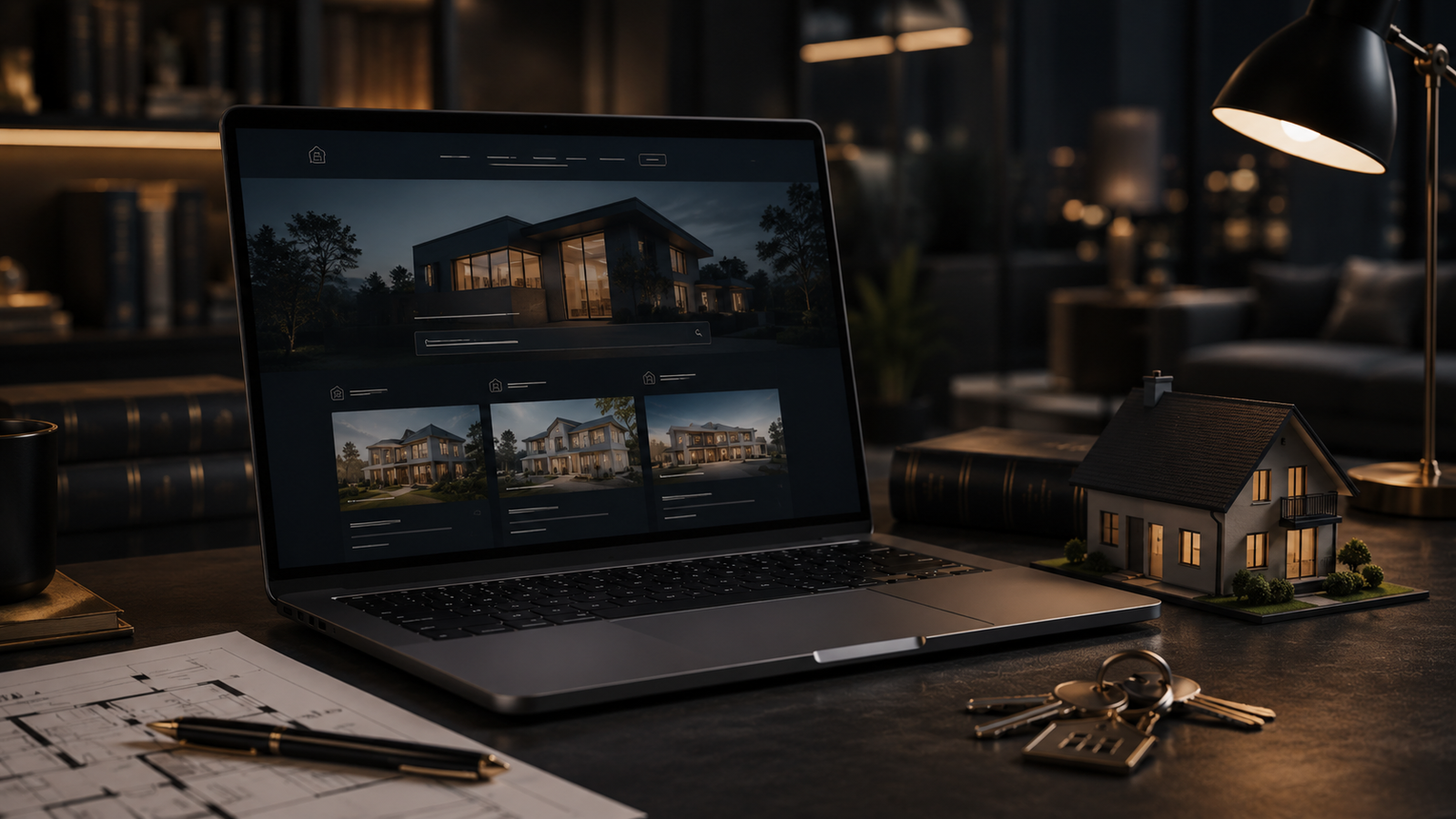
The property market has moved online. Buyers spend hours looking through photos and listings, comparing neighbourhoods and checking the reputation of brokers — all before they even pick up the phone. An agency without a good website with a full listings database is practically invisible to this audience.
Property listings on portals like imot.bg and homes.bg bring traffic — but they don't build trust in the agency. An agency's own real estate website is the place where a potential client gets to know the brokers, understands how you work and decides whether they want to trust you with one of the most important decisions of their life.
The listings database — the heart of the site
The foundation of any real estate website is a well-organised, up-to-date listings database. It must give the potential client a full picture quickly and easily:
- A filtered search — by property type (apartment, house, office), neighbourhood, price, floor area and number of rooms. Without good filters the database loses its value.
- High-quality photos of every property — a minimum of 8-10 photos showing each room in good light.
- Clear technical details — floor area, floor level, orientation, heating, floor plans. The client shouldn't have to call for basic information.
- A map with the exact location — proximity to the metro, schools and shops is a key factor in the choice.
- A virtual tour or video — saves both the client and the broker unnecessary viewings of unsuitable properties.
Broker profiles — trust through faces
In the property business people don't buy a property from an agency — they buy from a specific broker they have come to trust. The site must present each broker as a real person with a story, experience and specialisation:
- Photo and short bio — how many years of experience, which neighbourhoods they specialise in, which property types.
- Direct contact — a phone and email for each broker individually.
- Client reviews — real recommendations build trust more strongly than any description.
- The broker's active listings — shows engagement and real experience with specific properties.
Property buyers and sellers choose a broker mainly on the basis of recommendations and online presence. A site with real broker profiles and client reviews increases the chance of contact significantly.
Local SEO — "property + neighbourhood"
Most property searches have a strong local character: "apartments for rent Lozenets", "two-bedroom apartment Plovdiv Karshiyaka", "property near the Sea Station Varna". An optimised site with specific local keywords can rank for these searches and bring quality traffic without paid advertising.
For local SEO in real estate to work:
- Separate landing pages for neighbourhoods — a "Property in Lozenets" page with specific listings and a description of the area attracts targeted traffic.
- Descriptions with local context — every listing should mention the neighbourhood, nearby landmarks and transport.
- Google Business Profile — an optimised profile with regular posts and reviews helps with searches like "real estate agency + city".
- Site speed — Google ranks faster sites better, and users abandon slow ones.
A clear process — for sellers and buyers
Buying or selling a property is a stressful process for most people. The site should reduce the anxiety by explaining clearly how you work:
- For buyers — how a viewing works, how the negotiation process runs, what documents are needed, how you finance the purchase.
- For sellers — how you value the property, how you advertise it, how long a sale takes on average, what your commission is and why it's worth it.
- Frequently asked questions — answering the most common questions on the page reduces the number of unnecessary calls and builds trust.
Mobile version and fast loading
People browse property listings from every device — mostly from a phone, on the metro, on holiday, in the evening before bed. The site must work perfectly on mobile: load the photos quickly, allow easy use of the search and show the map clearly on a small screen.
Google indexes and ranks sites primarily by their mobile version (mobile-first indexing). A site that is slow or poorly optimised for mobile loses positions in Google — regardless of the quality of the listings.
Real estate agencies that invest in their own optimised site report a higher number of direct enquiries and higher conversion than those relying entirely on property portals.
Summary:
If you run a real estate agency, here are the key takeaways:
- The listings database is the heart of the site — good photos, detailed descriptions and an easy search are essential.
- Broker profiles build trust — people choose a broker, not an agency.
- Local SEO brings targeted traffic — separate landing pages for neighbourhoods are an effective strategy.
- A clear process reduces anxiety — explain how you work for buyers and sellers.
- The mobile version is essential — most listing views happen on a phone.
Building a real estate agency website is an investment with a clear direction — more direct enquiries, less dependence on property portals that charge commission, and stronger trust in the agency and its brokers. In the property business trust is everything — and the site is the tool with which you build it online.
We build your agency's website for you
Save the time and stress of building it yourself. We take care of everything — design, listings database, local SEO and hosting. The result: more direct enquiries, less dependence on portals.
Get a free consultation