
Booking.com, Airbnb, Expedia — these platforms bring visibility, but they take a commission of between 15% and 25% on every booking. On a €50 room the platform keeps up to €12.50. Multiply that by the number of nights and the figure grows quickly. An own website with a direct booking system doesn't eliminate the OTA platforms, but it reduces your dependence on them and increases the margin on every direct booking.
Building a hotel or guesthouse website is a strategic investment: it works around the clock, presents the property in the best light and lets the guest book directly — without a middleman. In this article we look at how a well-built site can shift the balance between direct and platform bookings.
An online booking system — the heart of the hotel site
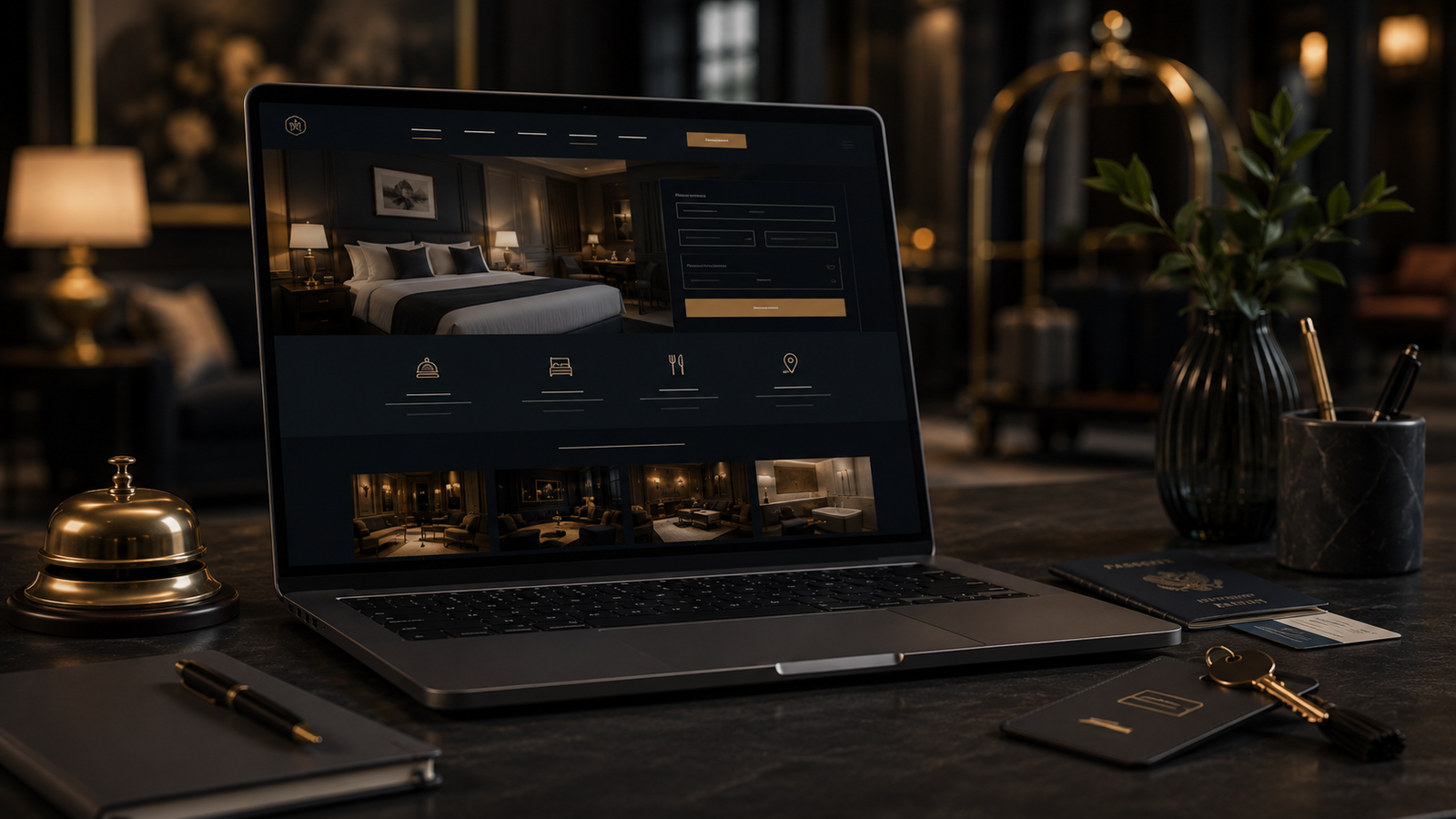
A guest who has found your hotel on Google or on social media should be able to book directly — without being redirected to Booking.com. An integrated booking system makes the process significantly easier:
- A calendar with real availability — the guest sees which dates are free without having to ask by email or phone.
- Clear prices and terms — the nightly rate, cancellation policy, deposit — all in one place.
- A choice of room or apartment — if you have different types of accommodation, the guest picks a specific one.
- Automatic confirmation — an email with the booking details, the address and directions.
Even if you don't want a full booking system right away, a "Booking enquiry" form is significantly better than a phone number alone. It works at night, at weekends and on holidays — exactly when people are planning their trip.
The room gallery — the first impression is built visually
The booking decision is made largely on the basis of the photos. The guest can't see the room in person before paying — and the photos are all they have to rely on. Investing in good photography is perhaps the most important thing for a hotel site:
- A photo of every room or apartment — bed, bathroom, view, details like amenities and the TV. The guest wants a full picture.
- Photos of the common areas — reception, restaurant, terrace, pool, garden. They sell the atmosphere of the property.
- Photos of the details — breakfast, the view from the window, the proximity to the beach or the mountain. They make the offer concrete.
- Optimised for fast loading — beautiful photos also have to load quickly, otherwise you lose customers before they've seen everything.
Hotels with a rich gallery and detailed room descriptions receive more direct booking enquiries — a guest who finds everything they need on the site doesn't have to look for additional information elsewhere.
Pricing policy and special packages
Platforms like Booking.com show only a nightly price. Your own site can offer significantly more value that justifies a direct booking:
- A direct discount — "Book directly and save 10%" is a strong incentive for the guest to bypass the platform.
- Packages and additional services — a romantic weekend with dinner, a family package with children's activities, corporate rates.
- Flexible cancellation terms — if you offer better terms on a direct booking, show it clearly.
- A loyalty programme — even a simple "on your 3rd booking you get a free night" system keeps guests coming back.
Local SEO for hotels and guesthouses
When someone searches for "hotel Bansko", "guesthouse Sozopol" or "family hotel Rila Monastery", they want to find a real accommodation option. A site optimised for these searches appears ahead of competitors in the organic results — without paying Google for advertising:
- Google Business Profile — a verified profile with real photos, opening hours, category and a link to the booking system.
- Local keywords — "hotel" plus the town, the resort or the nearby landmark should appear in the headings and descriptions.
- Schema.org for hotels — structured data that helps Google understand and present your property better.
- Mobile optimisation — a large share of hotel searches happen on a phone, especially for last-minute bookings.
A hotel with a well-optimised site can attract direct bookings from Google without relying entirely on the OTA platforms. Every such booking increases the margin and allows a more direct connection with the guest.
Reviews and reputation management
In hospitality, reputation is everything. Guests read reviews carefully before booking — and their decision is significantly influenced by the average rating and the latest comments. The site can help to actively manage that reputation:
- Embedded Google reviews — a section with real ratings on the site builds trust with new visitors.
- Encouraging reviews after a stay — an email after check-out with a link to Google or Tripadvisor increases the number of reviews.
- A response to every review — shows care for guests and is a signal to Google that the profile is active.
- Testimonials on the site — short quotes from satisfied guests, with permission, make the page more convincing.
Summary:
If you run a hotel or guesthouse, here are the key takeaways:
- Direct bookings are more profitable — with no OTA platform commission, the full revenue stays with you.
- The gallery is decisive — good photos of the rooms and the property are the main reason a guest chooses you.
- Special packages attract direct customers — a discount on a direct booking is a convincing incentive.
- Local SEO brings free organic traffic — an optimised site appears in searches without an advertising budget.
- Reputation is built online — reviews on Google and on the site are a key factor in the choice of a hotel.
Building a hotel or guesthouse website is a long-term investment with a measurable return. Every direct booking is proof that the site is working — and every such booking brings more revenue than a booking that comes through a platform.
We build your hotel's website for you
Save the time and stress of building it yourself. We take care of everything — design, gallery, booking system, local SEO and hosting. The result: more direct bookings, fewer commissions.
Get a free consultation