
A website for a restaurant where the guest sees the menu and books a table in a minute
Before they come, a guest checks three things from their phone: what you serve, at what price, and whether there is a table. If the menu is a blurred photo and the booking is "give us a call", they open the next restaurant. The site answers all three on the first screen.
- Free demo within 24 hours
- You pay only after you approve it
- From €749
- 5.0 on Google
Sample concept: a menu by category with photos and prices, and a table booking with a date and a number of guests. Switch the category.

Menu
- Roast beetroot and goat cheese salad280 g€9.50
- Cream of pumpkin soup300 ml€6.90


- Beef steak with vegetables350 g€24.00
- Pasta with mushrooms and parmesan320 g€13.50


- Chocolate cake140 g€7.20
- Tiramisu made here150 g€6.80


- Red wine · glass150 ml€5.50
- Espresso30 ml€2.40


How a guest chooses a restaurant online
Usually from a phone, within a few minutes, and often for that same evening. The site has to be faster than the question.
- The occasionThey search for "restaurant + neighbourhood", "dinner for a birthday", "lunch near the office" and open the map and two or three sites at once.
- The menuThe first thing they look at is what there is and what it costs. A text menu with categories and prices — not a PDF they have to pinch-zoom.
- The feel of the placePhotos of the room and of the dishes, the garden, a corner for children, parking. They decide whether the place suits the occasion.
- The tableThey want to book for a particular date, time and number of guests — right away, without calling at the busiest hour when nobody picks up.
- Coming backAfter the visit — a review in Google, an event on the site, a seasonal menu. The site gives them a reason to return.
That is why the menu and the "Book a table" button are on the first screen, and the story of the place comes further down.
What the website of a restaurant has to do
Jobs from the daily life of a restaurant that a social media profile or a booking platform cannot do without a commission and without taking control away from you.
The menu is a photo on Facebook or a PDF that will not read on a phone, and the prices change often.
A text menu by category with prices, allergens and labels (vegan, gluten free). You change a dish or a price yourself in a minute; Google can see the menu and shows it in search.
On a Friday evening the phone never stops, and some bookings get lost or written down wrong.
Table booking online: the date, the time, the number of guests, the occasion, a phone number. It reaches you immediately; you confirm with one tap. No commission to a platform.
People do not know you have a garden, a corner for children or a room for events.
A gallery by theme (the room, the garden, the dishes, events) and a separate page for company parties and private events, with an enquiry form.
Mostly people who walk past find you.
A structure of "type of food + neighbourhood", a Google Business profile with photos of the dishes, and reviews embedded on the site — visibility for "restaurant near me".
Features that fill the tables
The benefit comes first, the technology second. Everything below follows the way a place to eat is chosen.
A menu that reads on a phone
Categories, prices, portion sizes, allergens and labels. Text, not a picture — for the guest and for Google. A seasonal or a lunch menu is added in minutes.
Table booking with nobody in between
The date, the time, the number of guests, the occasion and a phone number. The request comes to you; you confirm by text or a call. Zero commission per booking.
A gallery that sells the atmosphere
The room, the garden, the dishes, events — the photos are optimised automatically so they open fast even on mobile data.
Events and private parties
A page for company dinners, birthdays and weddings with the capacity, a sample menu and an enquiry form.
Google reviews on the site
The real reviews from your profile appear on the site; after a visit the guest gets a link to leave a new one.
Location, opening hours, parking
A map, how to get there, parking and a phone number — on every screen, because the decision is often made in the car.
You change the menu yourself
Even the Starter Website comes with a panel: a new price, a new dish, "sold out" for the evening — from your phone, without waiting for a developer.
Prepared for "restaurant + neighbourhood"
Headings, structure and a menu as text, so Google understands your kitchen and your location. A foundation for local search, not a guarantee.
Online orders with delivery, a real-time table system or a link to booking platforms are agreed after the demo, with a deadline and a sum before the start.
The same logic in real projects
We have no published project for a restaurant. What we are showing you are websites from other trades where the gallery and a fast request are at the centre — the same principle we would apply for a restaurant.
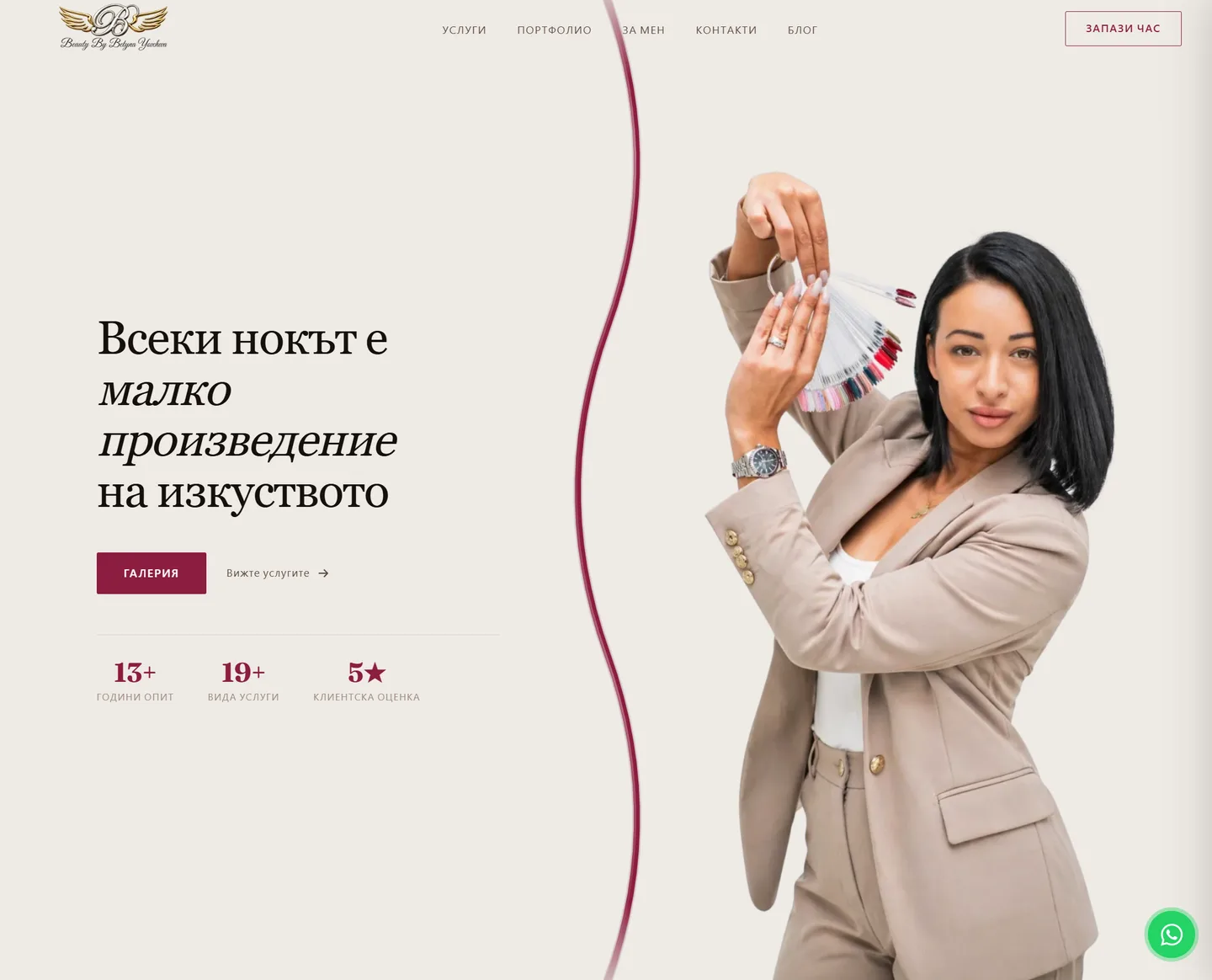

Beauty Nails by Betyna
An elegant gallery of designs and easy online booking — the site sells visually, just like the service itself.
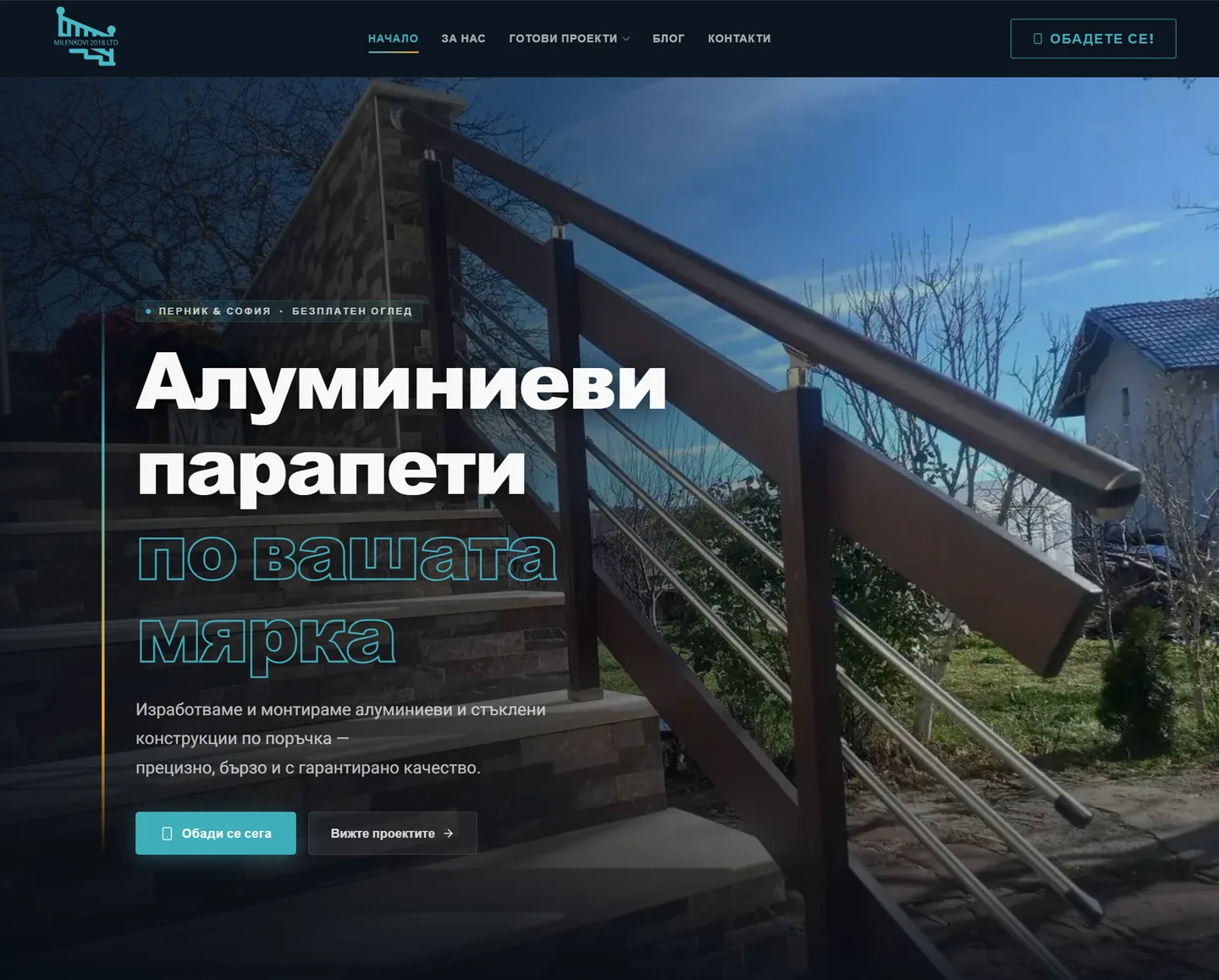

Milenkovi 2018
A manufacturer with completed projects — the project gallery is the main argument for trust, so it sits at the centre.
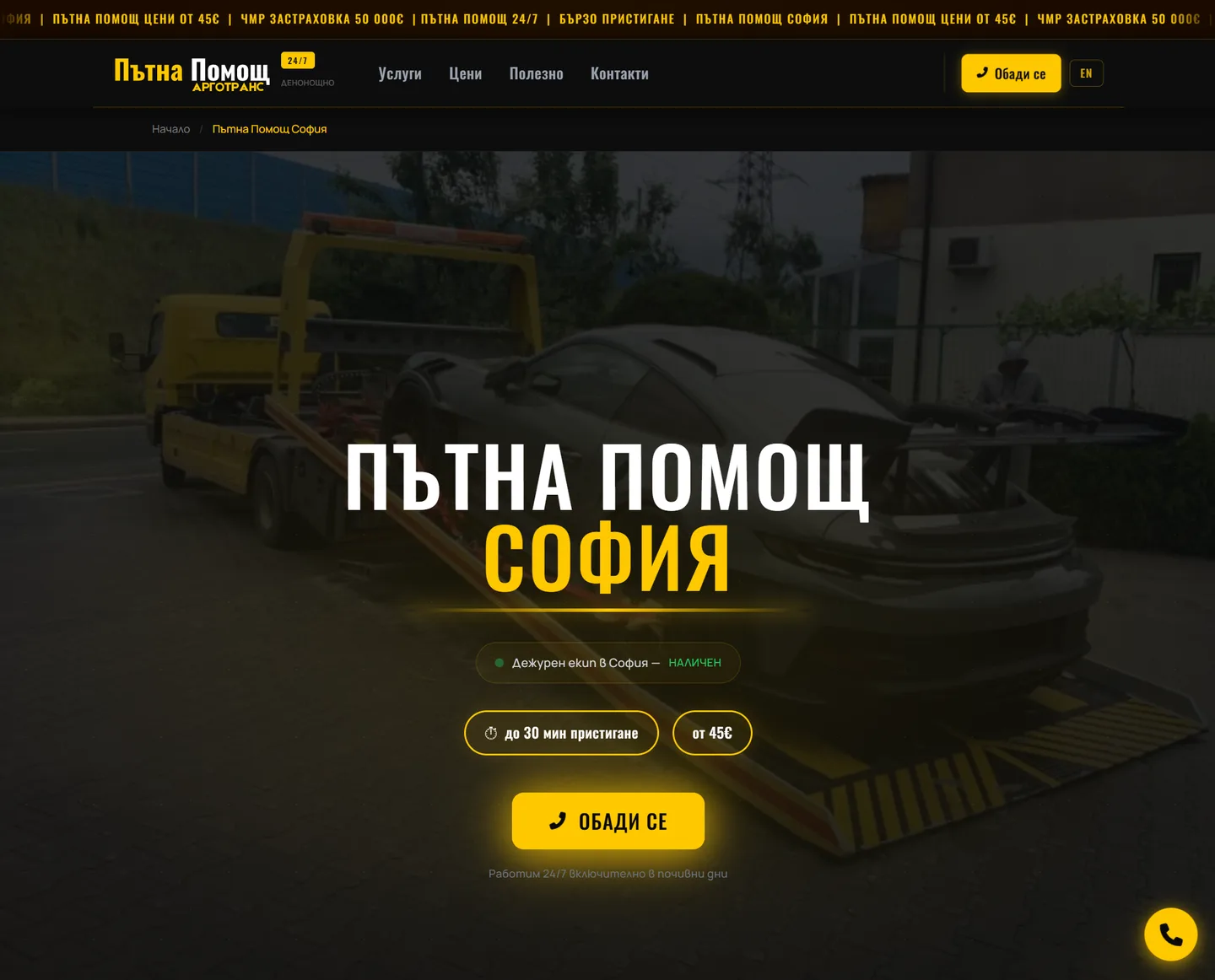

Argotrans Roadside Assistance
A service people look for urgently, from their phone — so the site is built around the quick call and clear services.
See how your menu could look online
You send us the menu (a photo of it is fine), a few shots of the room and the dishes, and the opening hours. We send back a design of the home page with your menu on it — free of charge, before you decide anything at all.
- You tell us about your businessWhat kind of food you serve, who your typical guest is, which dishes are your strongest, and what you most want people to book — a table, an event, lunch.
- We prepare a personalised demoA design of the home page with your logo, colours and content — ready within 24 hours.
- You see the real directionYou look at it on a desktop and a phone. You comment, you ask for changes — with no limit on revisions.
- If you like it, we carry onOnly then does the project start. If not, you owe nothing and you are committed to nothing.
The demo is free and commits you to nothing. Payment happens only after you approve the direction — 50% at the start and 50% on delivery.
How much does a website for a restaurant cost?
The price is the same for every trade — it depends on the scope and the features, not on whether you are a restaurant. You start at from €749; the demo is free and needs no deposit — you pay only after you approve the direction.
Starter Website
For a small business that needs a professional online presence and its first enquiries.
- Pages – up to 5
- A bespoke design, not a template
- Mobile version for phone, tablet and desktop
- Admin panel — edit it yourself
Business Website
For a business with several services that wants an English version, online booking and to be found locally.
- Everything in the Starter Website
- Pages – up to 10
- A second language version (BG or EN)
- Shared hosting and a domain for 1 year
Premium Website
For a business with many services that wants a website without compromises — more pages, more content and ready for advertising.
- Everything in the Business Website
- Pages – up to 15
- A premium design with animations
- A separate page for every service
Online Store
For a business selling products online — with payments, delivery and order tracking.
- Up to 20 products at launch
- Payments: cash on delivery and bank transfer
- Courier integration — Econt / Speedy
- Automatic delivery cost calculation
The menu, table booking, the gallery, events and a map all fit inside the Business Website. Online orders with delivery or a real-time table system are quoted after the demo.
From the first conversation to a published website
Five steps. The first real investment comes after you have seen the demo.
- EnquiryYou tell us what kind of food you serve, what the menu looks like and how you want bookings to come in.2 minutes
- Free demoA design of the home page with your logo, colours and a structure for the trade.within 24 hours
- ApprovalYou look at it on a desktop and a phone and comment. We carry on only if you like it.no limit
- BuildA menu with prices, table booking, a gallery, events, a map, the mobile version and the SEO foundation.usually within 7–14 working days
- PublishingOn your own domain, with Google Analytics and training on how to edit it yourself.+ optional maintenance
What our clients say
Real reviews from real projects — two of the authors own websites from the portfolio above.
„I am extremely surprised by how quickly my website was built. Everything he did on it took less than 2 days. There is nothing about the site that I do not like. I am very happy. Thank you from the bottom of my heart!“
„I am very happy with how the website and the online store were built! Communication was easy and pleasant, everything was done the way I wanted, and the end result is great. I recommend them wholeheartedly!“
„Very professional work. I trusted him and I do not regret it!!! Do not hesitate — book a consultation with the guy.“
„Incredibly good attitude towards the client and the work, speed and fairness, decent prices, and above all professionalism!!!! I recommend them wholeheartedly.“
Questions about a website for a restaurant

We have received your enquiry.
We will call you for a short conversation and send you a quote for your website.